|
Oxidation:
Chainmail is a durable and strong material. Chances are, if a nuclear bombardment ended the world tomorrow, your chainmail hauberk would probably be among the artifacts some alien archaeologist would find 1,000 years from now when they're examining the ruins. However, it is still possible to ruin it.
Galvanized steel, for one, is sometimes called "rust-proof," and for the most part it is. However, all iron and steel products have the potential to rust no matter what you might think. Yes, even Stainless Steel. Full-blown rust on your chainmail will probably not happen unless it's treated very, very badly. The most common form of metal breakdown that you'll see with your chainmail is mild oxidation.
As the outter surface of the metal is exposed to the atmosphere, the molecular composition of the metal begins to break down. To the naked eye, this just means that your chainmail will get dull over time. The best way to fight this is to simply use your chainmail. All metals that oxidize will become shinier with use. Ever seen mother pollishing the silver? Picked up a shovel and afer a little bit of digging, the area around the tip and the back looked shiney and new? Well, it's the same for chainmail. Just use your chainmail and the act of the rings rubbing against one another will keep them shiney.
Most extreme cases of metal breakdown, you won't have to worry about. There was a time, I wore a galvanized steel hauberk to an SCA event that was subject to 2 afternoons and evenings of hard rain. The next day, I placed the wet hauberk on the back porch to dry out. When I retrieved it the next day, it was completely white. When the hauberk was shaken out, the white layer of oxidation flaked off in a dusty cloud, and the hauberk was more or less good as new underneath, slightly greyer than before however. This is an example of the kind of punishment a galvanized steel chainmail piece can take.
This does not mean you can't do some serious damage to it by leaving it exposed to water. I have also seen a collection of chainmail pieces left in a backyard shed for a long period of time where water leaked in and pooled all of the time. Being constantly exposed to these conditions, a lot of the pieces showed signs of rust. If such a thing happens to your piece, since each ring cannot be treated individually, it's best to dry it out and rub it down completely with some sort of cloth. You'll notice the exterior rust will rub off on your cloth, leaving it orange. Once you've finished with the whole piece, shake it vigorously(If it's not a delicate piece) outside. For the deeper rust, about all you can do is use it and hope it rubs itself shiney again. Do not use anything really rough for this process such as sandpaper or metal screen-It will scratch the outter zinc plating and make it easier for rust to take hold and expand.
I received an e-mail tip from a James S. regarding this section in which he points out in medieval times, placing the piece in a barrel of sand and rolling down a hill was a good method, or even today, using a junky washing machine. If I might elaborate on this a bit, I would only recommend this for severely rusted pieces, and only using fine, round-grained sand. This is the same method used for shining the jackets of firearms ammunition, though the technique most often used there involves intense vibration of the sand which creates more friction. I should point out that I've never tried this, but practical applications of this might include a sand-filled drum with a hand crank, or even a very strong motor. Alternatively, any contraption filled with a polishing material(such as sand) that causes the sand to vibrate. Again, this method can be damaging to the surface of any metal and it's shiney effect will be temporary as you've caused thousands of little scratches on the surface which will oxidize more rapidly and have greater potential to rust, especially gavlanized steel of which it's zinc plating could be stripped. I'd only recommend this solution as a temporary fix for pieces in bad shape to start with.
A last note on oxidation is that you'll want to store your chainmail somewhere that it will not be in contact with something you don't want stained. For example, you don't want to keep your armor laying on the carpet for long periods of time unless it's resting on a towel or some other cloth. This doesn't mean chainmail stains anything it touches. It's the same thing as if you were to leave a large pile of pennies on the carpet. More or less harmless, but if they're there for a long time, you'll probably notice that part of the carpet is a little darker than the rest. Don't be afraid to toss your chainmail aside on the floor when you get home from using it, but make sure you find a better place for it when it comes to storage.
Repair:
All chainmail with any handling or usage will require repair eventually. Chainmail featured on this site is not composed of riveted links-They are butted. This means that rather than being a seamless, closed circle, the ends are closed to line up with the other and are held together by the sheer strength of their circular shape. So when stress is put on them, they have the potential to slide out of position slightly. When this happens, you'll want to(really should) fix them. Bellow are some steps to help this:
|
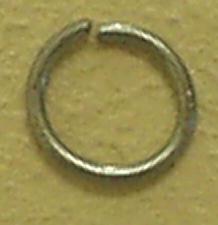
Here's an example of a ring that needs repair. Naturally, you won't be removing the ring you're working on from the piece, but this is shown by itself to more clearly portray how this works.
|
|
|
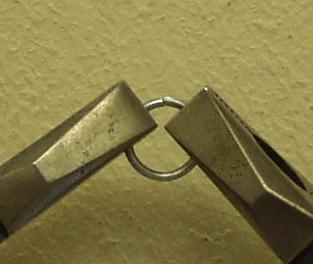
You need to get a pair of sturdy pliars with which to manipulate the ring. Grip the ring on either side near the top with the pliars and work it back into it's original alignment.
|
|
|
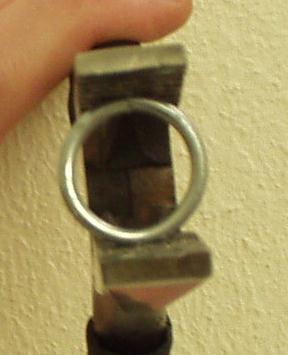
Though it may seem like a good idea, never try to close a ring as shown to the right. It is very hard to control the pressure you apply when squeezing a ring like this. The two ends could slip, causing you to crush your ring. This would put a permanent kink in the metal that you may not be able to fix.
|
|
|
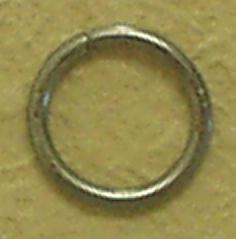
Once you finish, the ring should look like this. You can tell how well you did by running the tip of your finger over the gap. It should be smooth now.
|
|
When fixing links, always leave them in the original position they were in, in relation to the rest of your piece. Do not attempt to remove them and replace them unless you know what you're doing. Even the most experienced mail workers can lose the pattern when a ring is removed entirely from a piece.
Take good care of your chainmail and it will remain in good condition well after your lifetime.
|